Causes Behind Persistent Ankle Pain

Ankle pain may develop when nerves surrounding the foot and ankle become irritated, compressed, or damaged. These nerves travel from the brain through the legs and into the feet, helping control movement and provide sensation. When a nerve experiences pressure or injury, it may interfere with normal foot function and cause ongoing discomfort. One possible cause of ankle pain is tarsal tunnel syndrome, which occurs when a nerve becomes compressed within a narrow passage along the inside of the ankle. This nerve, known as the posterior tibial nerve, provides feeling to areas of the foot. Pressure on this nerve may lead to persistent pain and changes in sensation.


Symptoms of nerve-related ankle pain vary depending on the location and severity of the irritation. Common signs include burning discomfort, tingling, and numbness around the ankle or foot. Some individuals experience sharp or shooting pain that extends into the toes. Others notice reduced sensation, making it difficult to feel certain types of contact or temperature changes. Nerve damage may also affect the muscles responsible for moving the foot and toes. These symptoms sometimes develop gradually and become more noticeable as nerve irritation continues. Persistent ankle discomfort may interfere with walking, standing, and other daily activities. Identifying the source of the pain is important because different nerves affect different areas of the foot.


A podiatrist evaluates ankle pain by examining the affected area and identifying possible signs of nerve compression. The examination focuses on the location of discomfort, changes in sensation, and movement difficulties. Understanding which nerve is affected helps guide appropriate treatment decisions. Podiatric care focuses on addressing the source of nerve irritation and improving foot and ankle function. Early evaluation is especially important when symptoms persist or sensation begins to change. If you are experiencing ongoing ankle pain, tingling, or numbness, it is suggested that you consult a podiatrist for an evaluation and appropriate treatment options.

Ankle pain can be caused by a number of problems and may be potentially serious. If you have ankle pain, consult with Leonard Talarico, DPM from Georgia. Our doctor will assess your condition and provide you with quality foot and ankle treatment.

Ankle pain is any condition that causes pain in the ankle. Due to the fact that the ankle consists of tendons, muscles, bones, and ligaments, ankle pain can come from a number of different conditions.

Causes

The most common causes of ankle pain include:

  • Types of arthritis (rheumatoid, osteoarthritis, and gout)
  • Ankle sprains
  • Broken ankles
  • Achilles tendonitis
  • Achilles tendon rupture
  • Stress fractures
  • Bursitis
  • Tarsal tunnel syndrome
  • Plantar fasciitis

Symptoms

Symptoms of ankle injury vary based upon the condition. Pain may include general pain and discomfort, swelling, aching, redness, bruising, burning or stabbing sensations, and/or loss of sensation.

Diagnosis

Due to the wide variety of potential causes of ankle pain, podiatrists will utilize a number of different methods to properly diagnose ankle pain. This can include asking for personal and family medical histories and of any recent injuries. Further diagnosis may include sensation tests, a physical examination, and potentially x-rays or other imaging tests.

Treatment

Just as the range of causes varies widely, so do treatments. Some more common treatments are rest, ice packs, keeping pressure off the foot, orthotics and braces, medication for inflammation and pain, and surgery.

If you have any questions please feel free to contact our office located in Pooler, GA . We offer the newest diagnostic tools and technology to treat your foot and ankle needs.


Read more about Ankle Pain

Are You Suffering From Ingrown Toenails?

If left untreated, an ingrown toenail can lead to more serious concerns, such as an infection. Knowing proper nail care can help in the prevention of an ingrown toenail. Give us a call, and get treated!

When Foot Corns Become Painful

Corns are round areas of thick, hardened skin that commonly develop on the toes or soles of the feet. They form when the skin is repeatedly exposed to pressure or rubbing. Tight-fitting shoes are a frequent cause because they can press against the toes. Foot deformities and joint problems may also increase pressure in certain areas, making corns more likely to develop. Unlike a general callus, a corn usually has a clearly defined center of dense, hard skin. Corns can become painful, especially while standing or walking, and may interfere with comfortable movement.


The appearance of a corn can vary depending on where it develops. Corns on exposed areas of the foot are often raised with yellowish-beige hardened skin. Those between the toes may look whitish and feel softer because moisture collects in that area. Continued pressure can cause the hardened tissue to grow deeper, increasing pain and irritation. Corns can sometimes be confused with plantar warts, but they have different features. A corn typically has a visible core, while a plantar wart may have small brownish dots. An accurate diagnosis can help determine the reason for the skin change and guide appropriate care.


A podiatrist can examine corns and identify the pressure or friction contributing to their development. This is especially important for people with diabetes or poor circulation, because they may have a greater risk of injury or healing problems. Professional treatment may include safely reducing thickened skin and addressing pressure with footwear or orthotic support. When a foot deformity contributes to recurring corns, a podiatrist can evaluate the underlying structural problem and recommend suitable treatment. Addressing the source of repeated pressure can help reduce discomfort and recurrence. If a painful or persistent corn is affecting your ability to walk comfortably, it is suggested that you consult a podiatrist for an evaluation and appropriate treatment options.

Corns can make walking very painful and should be treated immediately. If you have questions regarding your feet and ankles, contact Leonard Talarico, DPM of Georgia. Our doctor will treat your foot and ankle needs.

Corns: What Are They? And How Do You Get Rid of Them?
Corns are thickened areas on the skin that can become painful. They are caused by excessive pressure and friction on the skin. Corns press into the deeper layers of the skin and are usually round in shape.

Ways to Prevent Corns
There are many ways to get rid of painful corns such as:

  • Wearing properly fitting shoes that have been measured by a professional
  • Wearing shoes that are not sharply pointed or have high heels
  • Wearing only shoes that offer support

Treating Corns

Although most corns slowly disappear when the friction or pressure stops, this isn’t always the case. Consult with your podiatrist to determine the best treatment option for your case of corns.

If you have any questions, please feel free to contact our office located in Pooler, GA . We offer the newest diagnostic and treatment technologies for all your foot care needs.

Read more about Understanding Corns and Calluses

When Ankle Pain Affects Mobility

Ankle pain can make walking, working, and other daily activities uncomfortable. Ankle problems are common and may begin after an injury, such as tripping or rolling the ankle. Pain can also develop from a flare-up of an existing problem or weakness in the muscles surrounding the joint. Soft-tissue injuries are another frequent cause. Soft tissues include the ligaments, muscles, and tendons that help support and move the ankle. Depending on the problem, symptoms may include pain, swelling, and stiffness. Discomfort can also affect nearby areas of the foot or calf.


An ankle problem may change the way a person walks and sometimes cause a noticeable limp. Symptoms vary depending on the cause and severity of the problem. While many new ankle problems gradually improve, certain symptoms require prompt medical attention. Significant trauma, difficulty placing weight on the leg, or an ankle that appears misshapen should be professionally evaluated. Redness and warmth around the ankle accompanied by feeling feverish or unwell can indicate an infection. A calf that becomes hot, swollen, and tender is another reason to seek medical care. Persistent or worsening ankle pain should also receive professional attention.


A podiatrist can examine the ankle to determine whether the symptoms involve the muscles, ligaments, or tendons surrounding the joint. An evaluation may include reviewing how the problem started and checking the ankle for swelling, stiffness, and changes in movement. Understanding the cause of the pain allows the podiatrist to recommend appropriate treatment based on the individual problem. Professional care can also help address ankle problems that interfere with walking or continue to worsen. Early evaluation is especially important after significant injuries or when symptoms suggest a more serious problem. If ankle pain, swelling, or stiffness continues to affect your mobility, it is suggested that you consult a podiatrist for an evaluation and appropriate treatment options.

Ankle pain can have many different causes and the pain may potentially be serious. If you have ankle pain, consult with Leonard Talarico, DPM from Georgia. Our doctor will assess your condition and provide you with quality foot and ankle treatment.

Ankle pain is any condition that causes pain in the ankle. Due to the fact that the ankle consists of tendons, muscles, bones, and ligaments, ankle pain can come from a number of different conditions.

Causes

The most common causes of ankle pain include:

  • Types of arthritis (rheumatoid, osteoarthritis, and gout)
  • Ankle sprains
  • Broken ankles
  • Achilles tendinitis
  • Achilles tendon rupture
  • Stress fractures
  • Tarsal tunnel syndrome
  • Plantar fasciitis

Symptoms

Symptoms of ankle injury vary based upon the condition. Pain may include general pain and discomfort, swelling, aching, redness, bruising, burning or stabbing sensations, and/or loss of sensation.

Diagnosis

Due to the wide variety of potential causes of ankle pain, podiatrists will utilize a number of different methods to properly diagnose ankle pain. This can include asking for personal and family medical histories and of any recent injuries. Further diagnosis may include sensation tests, a physical examination, and potentially x-rays or other imaging tests.

Treatment

Just as the range of causes varies widely, so do treatments. Some more common treatments are rest, ice packs, keeping pressure off the foot, orthotics and braces, medication for inflammation and pain, and surgery.

If you have any questions please feel free to contact our office located in Pooler, GA . We offer the newest diagnostic tools and technology to treat your foot and ankle needs.

Read more about Ankle Pain

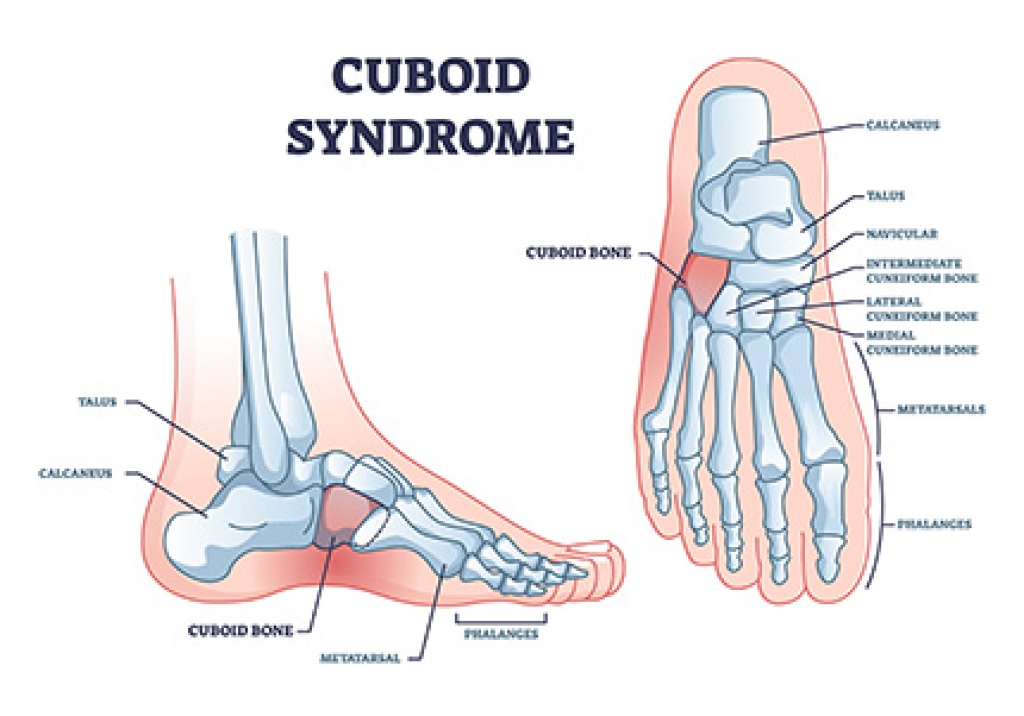
Cuboid Syndrome and Foot Pain

Cuboid syndrome is a condition involving the cuboid bone on the outer side of the foot. This small, cube-shaped bone connects with several nearby bones and helps form the lateral part of the midfoot. The cuboid also provides stability while supporting normal foot movement during walking. When the cuboid becomes slightly displaced or irritated, surrounding tissues can become painful. Symptoms may include outer-foot pain, tenderness, or discomfort when putting weight on the foot. Some people notice pain that becomes worse when walking, running, or pushing off the ground.

The cuboid is located between the heel bone and the bases of the fourth and fifth metatarsals. It also connects with the navicular and lateral cuneiform bones, creating an important part of the foot’s structure. Because the cuboid helps support the outer arch and transfer forces across the foot, irritation can affect balance and movement. Cuboid syndrome may develop after an ankle sprain or another foot injury, and it can also occur when repetitive stress places excessive pressure on the midfoot.

Risk factors include activities that involve repeated running or jumping, especially when footwear does not provide adequate support. Sudden increases in athletic activity can contribute to irritation as well. Imaging tests may be recommended when a fracture or another condition needs to be ruled out. Treatment depends on the underlying cause and severity of symptoms.

A podiatrist may begin treatment by reducing activities that aggravate the foot and recommending supportive footwear. Padding or taping may help stabilize the cuboid while irritated tissues recover. In some cases, a podiatrist may use a gentle manual technique to restore the cuboid to a better position. More significant injuries may require immobilization while the foot heals. Follow-up care helps determine whether symptoms are improving and whether additional support is needed. If you have symptoms of cuboid syndrome, it is suggested that you consult a podiatrist for an accurate diagnosis and appropriate treatment.

Cuboid syndrome, also known as cuboid subluxation, occurs when the joints and ligaments near the cuboid bone in the foot become torn. If you have cuboid syndrome, consult with Leonard Talarico, DPM from Georgia. Our doctor will assess your condition and provide you with quality foot and ankle treatment.

Cuboid syndrome is a common cause of lateral foot pain, which is pain on the outside of the foot. The condition may happen suddenly due to an ankle sprain, or it may develop slowly overtime from repetitive tension through the bone and surrounding structures.

Causes

The most common causes of cuboid syndrome include:

  • Injury – The most common cause of this ailment is an ankle sprain.
  • Repetitive Strain – Tension placed through the peroneus longus muscle from repetitive activities such as jumping and running may cause excessive traction on the bone causing it to sublux.
  • Altered Foot Biomechanics – Most people suffering from cuboid subluxation have flat feet.

Symptoms

A common symptom of cuboid syndrome is pain along the outside of the foot which can be felt in the ankle and toes. This pain may create walking difficulties and may cause those with the condition to walk with a limp.

Diagnosis

Diagnosis of cuboid syndrome is often difficult, and it is often misdiagnosed. X-rays, MRIs and CT scans often fail to properly show the cuboid subluxation. Although there isn’t a specific test used to diagnose cuboid syndrome, your podiatrist will usually check if pain is felt while pressing firmly on the cuboid bone of your foot.

Treatment

Just as the range of causes varies widely, so do treatments. Some more common treatments are ice therapy, rest, exercise, taping, and orthotics.

If you have any questions, please feel free to contact our office located in Pooler, GA . We offer the newest diagnostic and treatment technologies for all your foot care needs.

Read more about All About Cuboid Syndrome

Connect With Us