
Have you noticed a bony protrusion on the side of your big toe? If so, you may have developed the foot condition known as a bunion. Don't let bunions interfere with your daily activities.
Have you noticed a bony protrusion on the side of your big toe? If so, you may have developed the foot condition known as a bunion. Don't let bunions interfere with your daily activities.

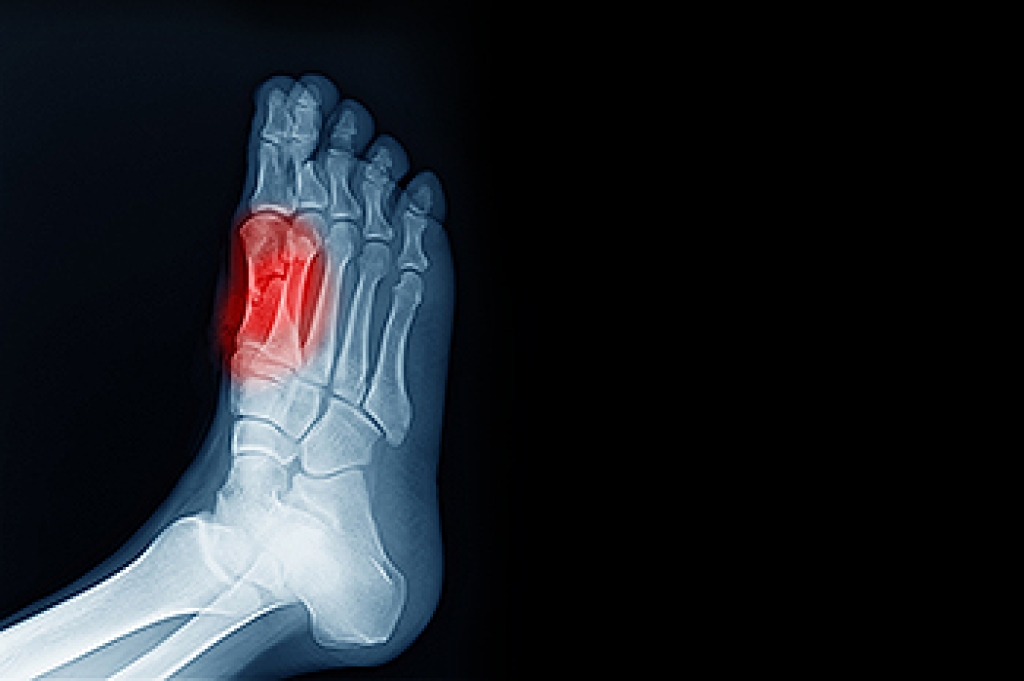
Repeated pressure on the feet and ankles can create tiny cracks in a bone called stress fractures. They differ from breaks caused by one sudden injury. Stress fractures develop when a bone cannot recover from repeated force. Runners, dancers, and athletes who suddenly increase training face a greater risk. People who spend long hours standing or walking can also be affected. Bones weakened by low bone density are more vulnerable. Stress fractures frequently occur in weight-bearing bones of the foot and lower leg. Pain usually begins in one spot and worsens with activity. Swelling and tenderness can develop near the injured bone.
Ignoring these symptoms can allow a small crack to worsen. Patients may begin to limp or have pain during daily activities. A podiatrist will ask about exercise, work demands, and changes in activity. The examination includes checking the area for swelling, tenderness, and changes in movement. X-rays may not show a stress fracture because the crack can be too small. An MRI scan or other imaging test can provide a clearer view. The podiatrist also looks for factors that place extra stress on the bone. These include foot structure, an uneven walking pattern, or shoes that lack proper support.
Treatment protects the bone so it can heal. A podiatrist may recommend a walking boot, a stiff-soled shoe, or crutches to reduce pressure. The choice depends on the fracture's location and severity. The podiatrist can explain which activities to limit and when a return is safe. Custom orthotics may improve pressure distribution and lower the risk of injury. Surgery may be needed when a fracture is unstable, has shifted, or is not healing. Follow-up visits help track healing and guide treatment changes. Returning to exercise too soon can reopen the crack or cause a complete break. If you have symptoms of a foot or ankle stress fracture, it is suggested that you schedule an appointment with a podiatrist for a diagnosis and appropriate treatment.
Activities where too much pressure is put on the feet can cause stress fractures. To learn more, contact Leonard Talarico, DPM from Georgia. Our doctor can provide the care you need to keep your pain free and on your feet.
Dealing with Stress Fractures of the Foot and Ankle
Stress fractures occur in the foot and ankle when muscles in these areas weaken from too much or too little use. The feet and ankles then lose support when walking or running from the impact of the ground. Since there is no protection, the bones receive the full impact of each step. Stress on the feet can cause cracks to form in the bones, thus creating stress fractures.
What Are Stress Fractures?
Stress fractures occur frequently in individuals whose daily activities cause great impact on the feet and ankles. Stress factors are most common among:
Symptoms
Pain from the fractures occur in the area of the fractures and can be constant or intermittent. It will often cause sharp or dull pain with swelling and tenderness. Engaging in any kind of activity which involves high impact will aggravate pain.
If you have any questions please contact our office located in Pooler, GA . We offer the newest diagnostic and treatment technologies for all your foot and ankle needs.

Foot pain can make walking, standing, and everyday movement more difficult. It may begin suddenly after an injury or develop gradually and continue for a longer period. Sudden, or acute, foot pain is often related to injuries such as muscle strains, sprains, or fractures. People who are physically active, work demanding jobs, or experience falls may have a greater chance of these injuries. A fracture can sometimes be mistaken for a sprain. This can make a professional evaluation more important when pain is severe or does not improve as expected.
Long-lasting, or chronic, foot pain can have more complex causes. Arthritis may cause painful inflammation in joints that receive frequent use while standing and walking. Some chronic foot pain can also begin outside the foot. Problems involving the spine may place pressure on nerves and cause discomfort that travels into the legs and feet. Nerve-related pain can also occur when a nerve becomes compressed or does not function normally. Because this type of pain may travel from one area to another, identifying its actual source can be challenging without a medical evaluation.
A podiatrist can evaluate foot pain to determine whether it is related to an injury, joint problem, or another underlying issue. The examination may include assessing the location of the pain, how it affects movement, and whether additional testing is needed. Once the cause is identified, a podiatrist can recommend appropriate foot pain treatment, based on the type and severity of the problem. Professional care is especially important when discomfort lasts, interferes with walking, or follows a significant injury. Early evaluation may also help prevent an untreated injury from becoming a more serious problem. If persistent foot pain is affecting your ability to walk or complete daily activities, it is suggested that you consult a podiatrist for an evaluation and appropriate treatment options.
Foot Pain
Foot pain can be extremely painful and debilitating. If you have a foot pain, consult with Leonard Talarico, DPM from Georgia. Our doctor will assess your condition and provide you with quality foot and ankle treatment.
Causes
Foot pain is a very broad condition that could be caused by one or more ailments. The most common include:
Diagnosis
To figure out the cause of foot pain, podiatrists utilize several different methods. This can range from simple visual inspections and sensation tests to X-rays and MRI scans. Prior medical history, family medical history, and any recent physical traumatic events will all be taken into consideration for a proper diagnosis.
Treatment
Treatment depends upon the cause of the foot pain. Whether it is resting, staying off the foot, or having surgery; podiatrists have a number of treatment options available for foot pain.
If you have any questions, please feel free to contact our office located in Pooler, GA . We offer the newest diagnostic and treatment technologies for all your foot care needs.
Pain under the base of the big toe may be caused by two small bones, called sesamoids. They sit beneath the end of the long bone that connects to the big toe. The tiny bones help the big toe move and absorb pressure as the foot pushes off the ground. In some cases, a sesamoid bone is fractured or shifts from its usual position. Dancers, certain athletes, and runners face a higher risk because their activities place repeated pressure on the front of the foot. High arches, bunions, and frequent wearing of high-heeled shoes can also increase strain in this area.
Pain from sesamoiditis is usually centered under the big-toe joint and can develop gradually. It may become sharper when walking, running, or bending the big toe upward. Walking barefoot can be painful because there is little protection beneath the sore area. Wearing thin-soled and high-heeled shoes can also make symptoms worse. The skin near the joint may appear red, warm, or swollen. These signs can resemble a fracture, arthritis, or gout. Continuing to place pressure on the area can limit movement and make a patient change how the foot meets the ground.
A podiatrist can examine the painful area, check big-toe movement, and evaluate the way pressure moves through the foot. X-rays can help identify a fracture, arthritis, or a change in the position of a sesamoid bone. An MRI scan or another imaging test can provide more detail when the source of pain remains unclear. A podiatrist can provide offloading pads, prescribe custom orthotics, or recommend shoes with thick soles and lower heels. A podiatrist also may suggest taping, a brace, or a walking boot to limit painful movement while healing. Surgery is rarely considered, but it can be an option for severe damage that does not improve with other care. If you have symptoms of sesamoiditis, it is suggested that you schedule an appointment with a podiatrist for a diagnosis and appropriate treatment.
Toe pain can disrupt your daily activities. If you have any concerns, contact Leonard Talarico, DPM of Georgia. Our doctor can provide the care you need to keep you pain-free and on your feet.
What Causes Toe Pain?
Most severe toe pain is caused due to a sports injury, trauma from dropping something heavy on the toe, or bumping into something rigid. Other problems can develop over time for various reasons.
Toe pain can be caused by one or more ailments. The most common include:
When to See a Podiatrist
Diagnosis
In many cases the cause of toe pain is obvious, but in others, a podiatrist may want to use more advanced methods to determine the problem. These can range from simple visual inspections and sensation tests to X-rays and MRI scans. Prior medical history, family medical history, and any recent physical traumatic events will all be taken into consideration for a proper diagnosis.
Treatment
Treatments for toe pain and injuries vary and may include shoe inserts, padding, taping, medicines, injections, and in some cases, surgery. If you believe that you have broken a toe, please see a podiatrist as soon as possible.
If you have any questions please contact our office located in Pooler, GA . We offer the newest diagnostic and treatment technologies for all your foot and ankle needs.

A bunion forms when the big toe begins to angle toward the other toes, and the long bone behind the joint shifts outward. This change creates a noticeable bump along the inside of the foot. Bunions can run in families, and extra movement within the foot joints can contribute to their development. Wearing narrow or pointed shoes and high heels can make bunions progress more quickly. Some bunions cause little discomfort, while others become painful enough to limit walking and other activities. The size of the bump does not always match the amount of pain a patient feels.
Bunion pain can become stronger when shoes press or rub against the enlarged joint. A podiatrist can examine the foot and assess the position of the big toe to diagnose the problem. Imaging can also help rule out other causes of pain or provide details when surgery is being considered. Treatment depends on the patient’s symptoms and how much the bunion affects movement. Wearing wide-fitting shoes can reduce pressure against the bump. A podiatrist can also recommend cushioning pads or specialized insoles to reduce discomfort and improve support while walking.
Non-surgical care can reduce bunion pain, but it cannot permanently correct the changed shape of the joint. A podiatrist can study the way a patient stands and walks to determine whether an orthotic, which is a specialized shoe insert, could improve comfort. For severe pain, other treatments can be considered based on the patient’s needs. Surgery is the only treatment that can correct the bunion’s shape and can be considered when pain limits activity despite appropriate care. A podiatrist can explain the available choices and help patients understand which approach fits their symptoms. If you have developed a bunion, it is suggested that you schedule an appointment with a podiatrist for effective relief and treatment solutions.
If you are suffering from bunion pain, contact Leonard Talarico, DPM of Georgia. Our doctor can provide the care you need to keep you pain-free and on your feet.
What Is a Bunion?
Bunions are painful bony bumps that usually develop on the inside of the foot at the joint of the big toe. As the deformity increases over time, it may become painful to walk and wear shoes. Women are more likely to exacerbate existing bunions since they often wear tight, narrow shoes that shift their toes together. Bunion pain can be relieved by wearing wider shoes with enough room for the toes.
Causes
Symptoms
In order to diagnose your bunion, your podiatrist may ask about your medical history, symptoms, and general health. Your doctor might also order an x-ray to take a closer look at your feet. Nonsurgical treatment options include orthotics, padding, icing, changes in footwear, and medication. If nonsurgical treatments don’t alleviate your bunion pain, surgery may be necessary.
If you have any questions, please feel free to contact our office located in Pooler, GA . We offer the newest diagnostic and treatment technologies for all your foot care needs.
Connect With Us